Baptism of a child
Preparation begins before a date is chosen. Parents and godparents help the child enter the life of the Church and continue this responsibility after Baptism.
Preparation first — then a meeting and a date
The following steps are required for parents and godparents before the catechetical meeting and before discussing a date for Baptism.
- Start attending church regularlyTake part in services and become involved in church life.
- Learn about the faithRead at least one Gospel. Read and try to understand the Creed, learn the main commandments of God and strive to live by them.
- Go to Confession and receive CommunionOrthodox parents and godparents prepare through Confession and Communion. If a parent has not been baptised or does not belong to the Orthodox Church, this requirement does not apply to them; discuss their preparation with the priest.
← Choose another preparation guide
Parents and godparents
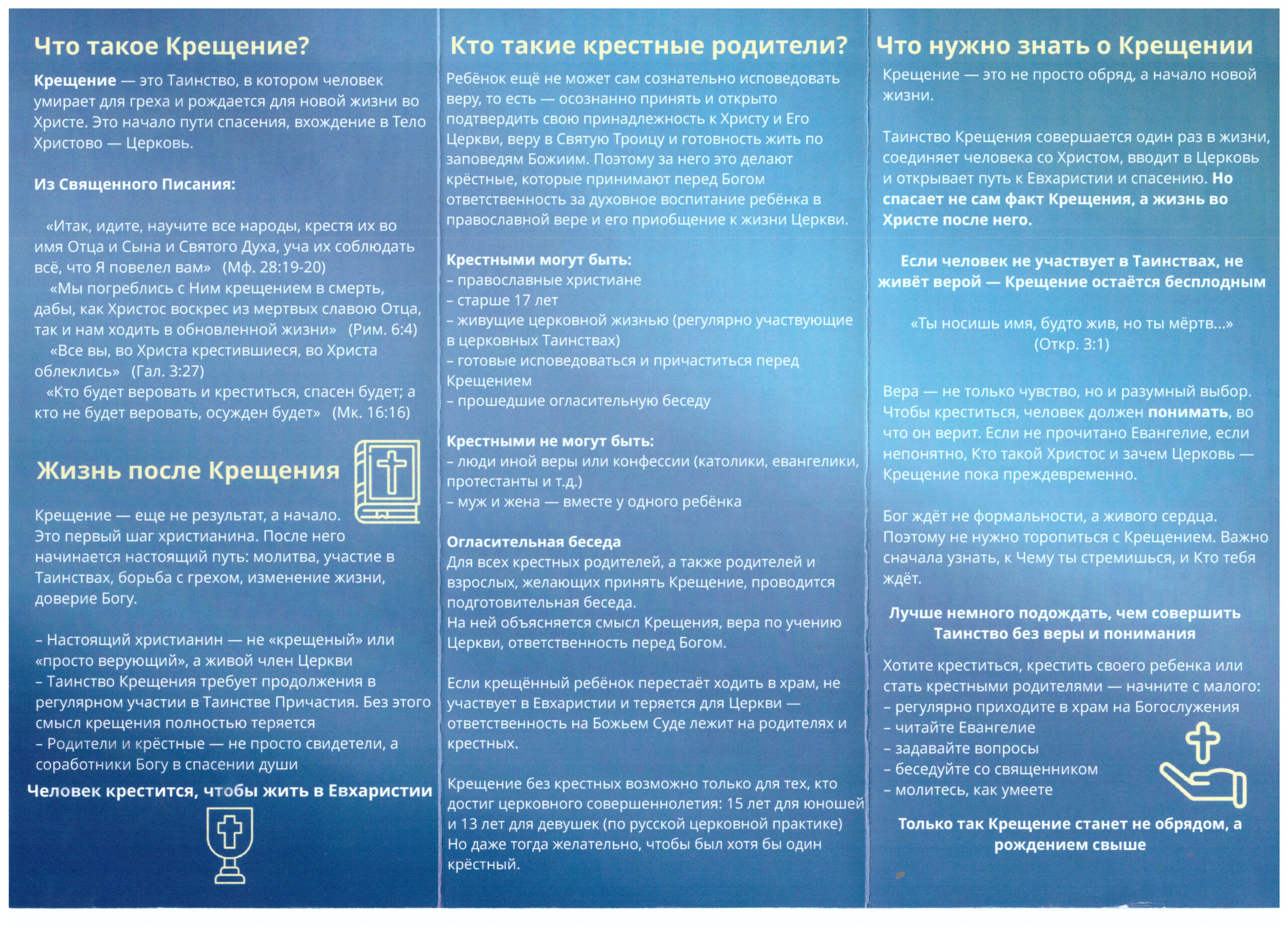
Parents and godparents accept responsibility before God for the child’s spiritual upbringing and participation in church life. Godparents are spiritual parents and helpers on the path to Christ.
Who can be a godparent?
- Orthodox Christians over the age of 17.
- People who live a church life and participate in services and the sacraments.
- Those willing to go to Confession and receive Communion before the Baptism.
Who cannot be a godparent?
- People of another faith or denomination.
- A married couple together for the same child.
Catechetical meeting and date
After completing the preparation steps, you will meet with the priest to discuss the meaning of Baptism, the faith of the Church and the responsibilities of parents and godparents. This is neither an examination nor a formality, but an expression of the Church’s help and care.
The date of Baptism is agreed with the priest after preparation and the meeting. Please do not choose a date on your own beforehand.
If a baptised child stops participating in church life and the Eucharist, the parents and godparents bear responsibility before God.
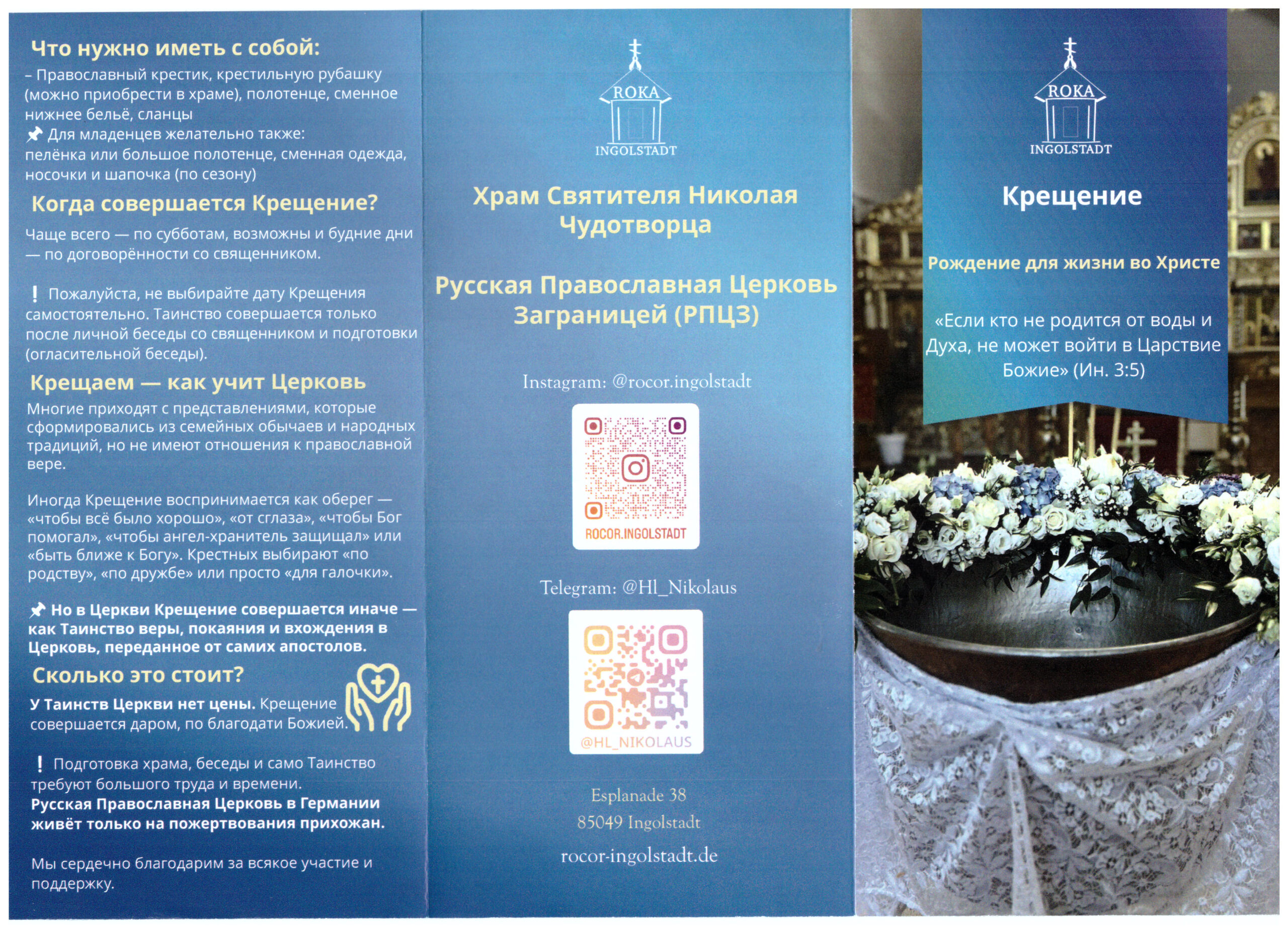
What to bring to the Baptism
- An Orthodox baptismal cross and baptismal garment — available at church.
- A towel and a change of footwear, such as sandals.
- For an infant, also bring a cloth or large towel, a change of clothing, socks and a seasonally appropriate hat.
The meaning of Baptism and life afterwards
Baptism is the sacrament in which a person dies to sin and is born into new life in Christ, entering the Body of Christ — the Church. Baptism takes place once in a lifetime.
After Baptism, Christian life begins: prayer, participation in the sacraments, struggling against sin, changing one’s life and trusting God. Baptism calls for continued, regular participation in the Eucharist.
“He who believes and is baptised will be saved” (Mark 16:16).
See also Matthew 28:19–20 and Romans 6:4.
How much does Baptism cost?
The sacraments of the Church have no price. Baptism is freely given through the grace of God. The church and parish are supported by the offerings of the faithful.
After Baptism, you may, if you wish and according to your means, give an offering directly to the priest who celebrated the sacrament as a personal expression of thanks. Do not transfer this personal offering to the parish bank account or parish PayPal.
Baptism leaflet (Russian original)
What happens after preparation?
After completing the steps above, discuss what comes next with the priest.
Contact the priest